
Jeff Bezos Could’ve Saved The Post But He Didn’t
I thought my time in local newspapers and digital media had desensitized me to layoffs. But it always hurts to lose something you love.

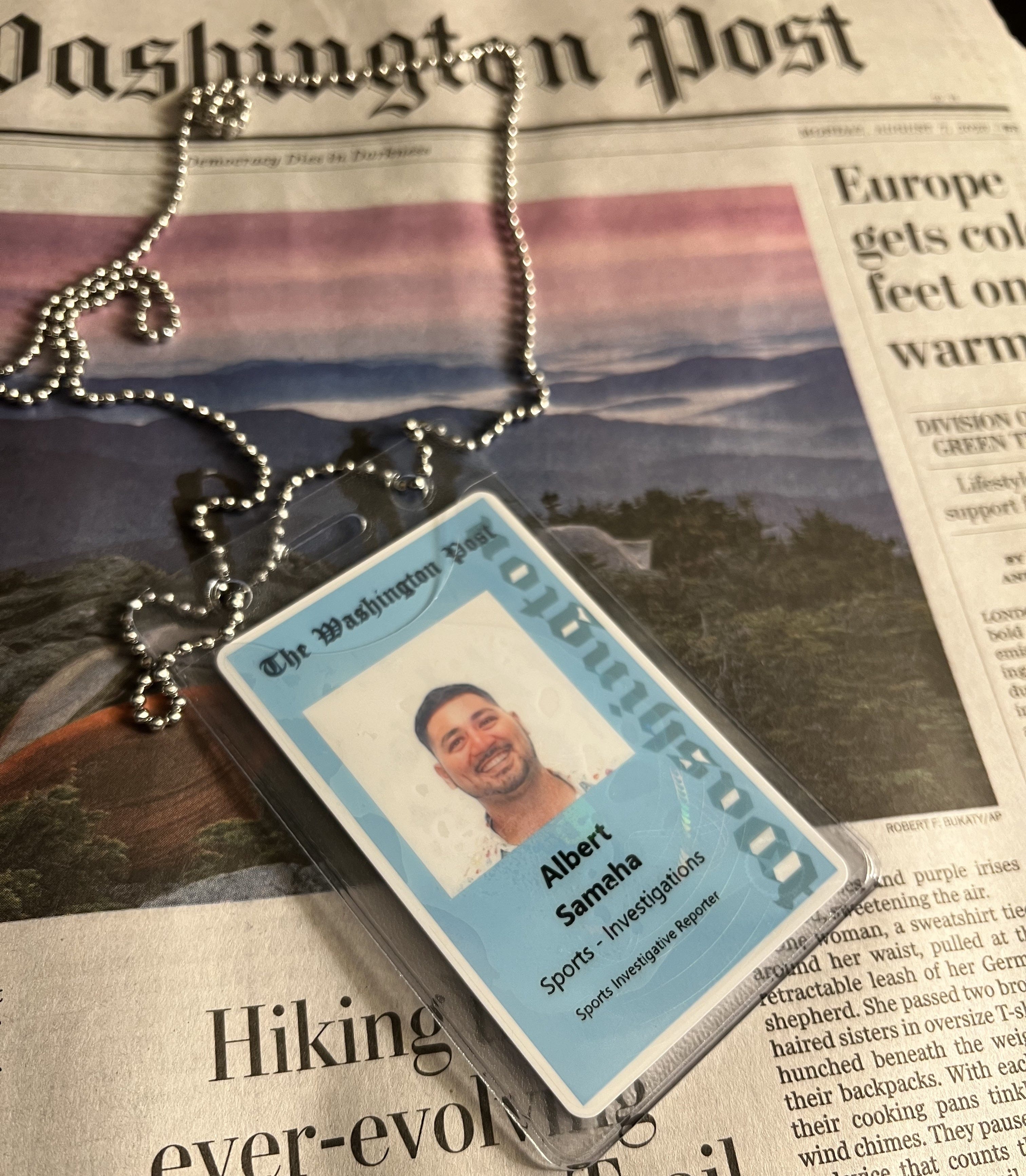
For all of my two and a half years at the Washington Post, the threat of layoffs hung over us. Whenever job loss seemed imminent for at least some of us, we parsed vague management statements for clues into who might be included in whatever plan lay ahead. Gallows humor spread far and wide.
Nothing new for me. I’m a battle-hardened veteran of our industry’s collapse, after all. I was months into my first job at an alt-weekly in St. Louis in 2011 when budget shortfalls trimmed our unit of staff writers from five to four. At an alt-weekly in San Francisco in 2012, I watched an investment group buy the paper, then cut the staff and merge us with two other local papers. The Village Voice hired me in 2013 after most of its staff quit in protest of forthcoming layoffs; I was there when the owners moved the big historic newsroom out of Greenwich Village and into a small glass office on Wall Street. At my first BuzzFeed Christmas party in 2014, I remember seeing fire dancers on stage in this lavish hall filled with young journalists rescued from print, and thinking: Either we’re saved or we’re doomed. It turned out to be the latter a few years later, though we made the most of the money in the time that we had it, doing work that matched our ambitions, running up expense accounts, building our careers in the digital media spotlight, enjoying a ride we weren’t completely delusional about, until the ship sank and we soothed our disappointment with the understanding that it had always felt like a dream anyway. I remember using the term “scar tissue” a lot in those days.
I like to think those experiences forged a grizzled poise. Rescued from the wreckage of digital media, I arrived at the Washington Post grateful and cynical, a willing nomad who never gets too comfortable with a work laptop or email account. Some of my colleagues had been at the paper for decades, the latest in a chain of institutional knowledge spanning a century. At the height of the BuzzFeed News boom, there were moments when I imagined growing old with the place, but the Post had an actual track record. No longer was my job reliant on alt-weekly escort ads or venture capital speculation. Now my paycheck was in the hands of a billionaire who apparently cared enough about journalism to buy one of the world’s great newspapers. As newsroom morale sunk with each round of cuts and each wave of lost subscribers, I kept my head down and on the work, mercifully siloed in New York, quarantined from spiraling vibes.
There’s always a reason to hope, though it looks different for everybody. For me, a reporter in the sports section, it was the simple belief that we had the best sports section in the world, the standard bearer of a vanishing species, a distinctive offering in the newspaper’s bundle. Our section delivered vivid profiles, incisive analysis and blockbuster investigations, along with definitive beat reporting. My own entry point into journalism had been a local sports section, when I was six and my mom unfurled the San Francisco Chronicle every morning. Now some little sports fiend was spilling Pop-Tart crumbs all over my byline, reading about international matchfixing scandals, gender inequalities in NIL payments, violent mismatches in high school football, Steve Ballmer’s sealed testimony about Dennis Robertson, migrants displaced by police sweeps before the Paris Olympics, UFC fans uncomfortable with Trump’s affiliation with the sport, WNBA fans distressed by the toxic culture some new male fans were bringing, a teenager attempting a $1 million kick on national television, a gambling influencer allegedly orchestrating one of the biggest point-shaving schemes in US history. I was rolling.
The question nagging me was: How long until the paper’s top leaders made a decision that would compel me to quit in protest? That was my main concern, more than layoffs, which come and go like a tropical rainstorm. Nothing to do but watch for clouds, look for cover, and prepare for contingencies. You can’t stay dry forever.
In November, I spent a few days in DC, meeting with editors and gossiping with peers. I crashed on the couch of a colleague who had been my reporting partner on a recent pair of big stories that had earned much praise and many readers, pulling in pageview numbers like it was 2015. Over beers in his apartment, we basked in our hot streak, plotting ideas, celebrating the journalistic thrill of hitting a groove. Everything couched with: but who knows what will happen?
We started the new year strong. Our section published high quality stuff on the NFL playoffs, the college football title game, the latest gambling indictment, the epidemic of knee injuries among top women’s athletes, and more. The Winter Olympics were imminent, the World Cup was coming to America, a betting scandal was expanding across basketball. Lots of excitement to keep my mind busy and off the compounding horrors in every direction. What a comfort to immerse in sports, the great unifier, an unguarded lens into a society’s soul.
On the day our section learned that the Post was cancelling plans to send reporters to the Winter Olympics, the most viewed story across the whole website was one of ours, a scoopy follow-up that highlighted the impact of our work: the FBI was investigating the death of Colts owner Jim Irsay after we revealed that a doctor had prescribed him heavy doses of ketamine and opioids in his final months.
The week that followed was a slow blur. I remember looking at my phone a lot, Slack threads, texts, every morsel of news and rumor, bleaker and bleaker yet entirely uncertain. Surely those fools weren’t actually going to kill the world’s best sport section, I kept thinking, though I knew better than to let my guard down. I’d been through this before, of course, not so long ago. The proactive steps were no mystery: the reach outs, file downloads, financial calculations, social media posts, cover letters. I braced myself for the emotional hit, ready to feel and process like a healthy adult, grateful for the scar tissue protecting me.
When BuzzFeed News shut down, I moved with frantic energy, channeling my anxieties into productivity, reeling in my catastrophizing with the certainty that I was giving myself the best possible chance at a decent landing. Comfortably employed there for eight years, I hadn’t navigated the job market under the pressures of an expiring paycheck. I forged an optimism that I protected fiercely, assuring sympathetic friends that I was not only okay, I was thriving. Chaos is a ladder and all that. I was proven right, because within months, I got a new job I loved as much as any I’ve had, and three years later, with that job crumbling, I re-enter the market with a fresh batch of clips and the memory of having figured it out before.
This time, I didn’t feel as energized with the possibilities of what’s next. This time, I went through the motions of essential tasks, the work calls and edits, a night out with friends, all the while resisting ruminations like a broken dam. I’d worked there for only two and a half years, I didn’t expect a consuming period of grief.
The air felt heavier. I chalked it up to the fascism. Everybody was anxious and outraged. And when you’re anxious and outraged, every irritation feels magnified, right? Every oppression, interconnected. Rich losers ruining good things for everybody. It all adds up, even while you hope it never will.
There aren’t many places left that pay good money for good journalism. Fewer and fewer islands to hop to when the seas rise. In those final years at BuzzFeed News, as we toasted from the bow of our slowly sinking ship, we talked circles around every mistake and crossroads. We fumbled the bag on podcasts. We killed the features desk at its height. We launched a cartoonishly bad IPO. But even at the end, we held out hope there was a way to get back afloat. I turned down a buyout when the newsroom shrunk by half and figured I’d ride it out til the end, doing work I love with people I love. When the newsroom shuttered a year later, I felt sad but at peace, comforted by the long goodbye. I believed, right or wrong, that the decisions that doomed us were still largely made in good faith.
This feels nothing like that.